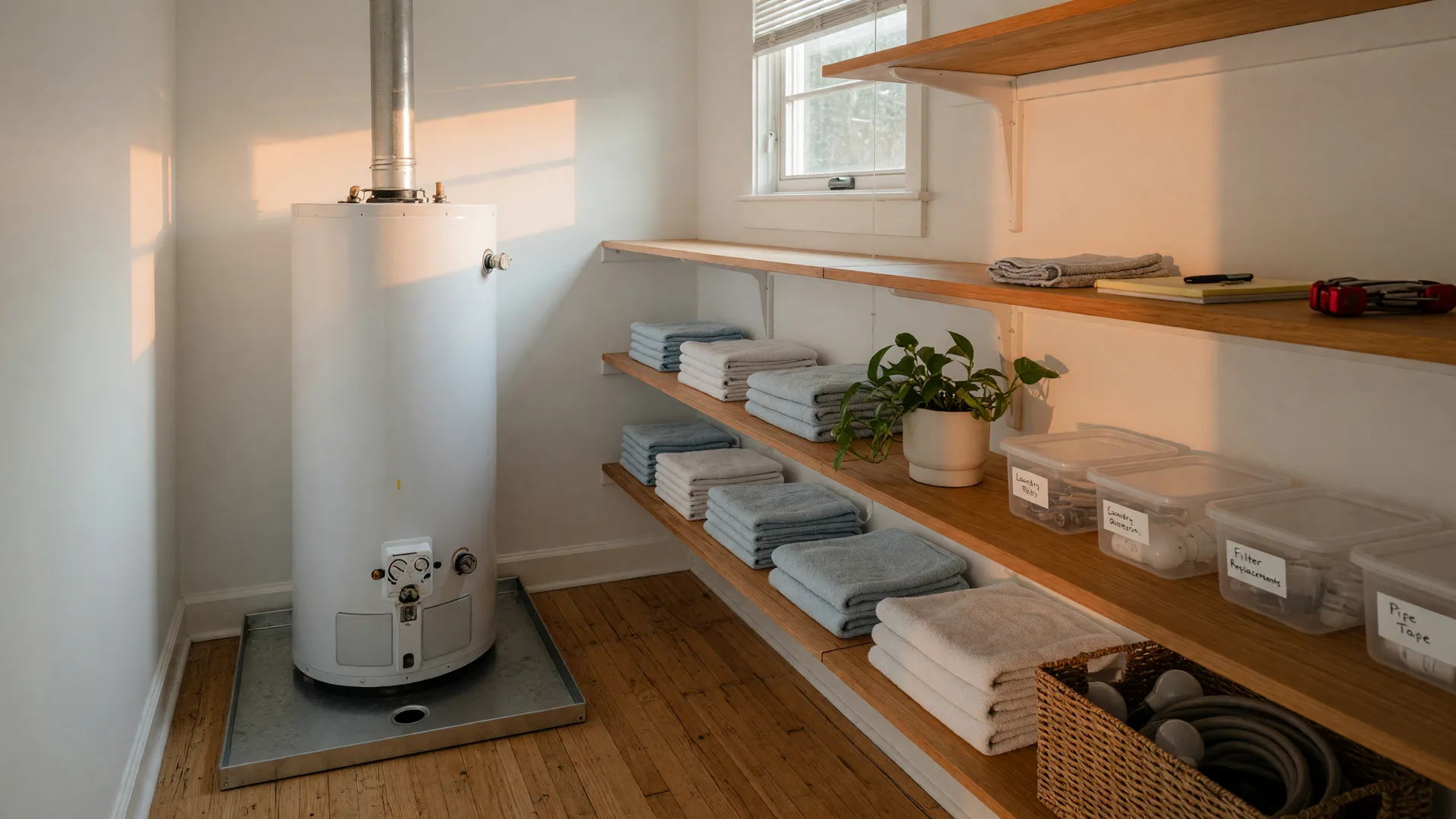
Water Heater Maintenance: A Simple Checklist for Atlanta Homeowners

Nadine Lutz, MBA, REALTOR®
Compass Real Estate · GA License #314077
Your water heater works quietly in the background, and most of us only think about it when the hot water runs out. A little seasonal attention keeps it running reliably through the cooler months and helps you catch small problems before they become expensive ones. Here is the simple checklist I share with my Atlanta clients.
Know Where It Is and How Old It Is
Start by finding your water heater and reading the manufacturer's label. The label usually lists the installation date or a serial number, which a quick online search can translate into an age. Most standard water heaters have a useful life of roughly 8 to 12 years, so if yours is approaching or past that range, it is worth planning for a replacement instead of waiting for a surprise.
Flush the Sediment Once a Year
Over time, minerals in the water settle at the bottom of the tank and form sediment. That layer makes the unit work harder and can shorten its life. Once a year, turn off the power or gas, attach a garden hose to the drain valve near the base, and drain a few gallons into a bucket or floor drain until the water runs clear. It is a simple task most homeowners can handle safely, but when in doubt, a plumber can do it in minutes.
Test the Temperature and Pressure Relief Valve
The temperature and pressure relief valve is a safety device that releases pressure if the tank gets too hot, and it can stick closed if it is never used. Once a year, put a bucket underneath, lift the valve's lever briefly, and let it snap back. A short burst of water is normal. If nothing comes out, or if the valve drips afterward, call a professional to take a look.
Keep an Eye on the Temperature Setting
Most water heaters are set to around 120 degrees Fahrenheit, a comfortable and sensible setting for most households. If yours is set much higher, turning it down saves energy and helps prevent scalding, especially in homes with young children.
Know the Warning Signs
Rust-colored water, popping or rumbling noises from the tank, puddles near the base, or hot water that runs out too quickly are all signals that something is changing. Do not ignore them. Catching a problem early almost always costs less than dealing with the aftermath of a leak.
When to Call a Professional
Annual flushing and valve tests are great home care, but major work belongs in professional hands. If you smell gas, see active leaking, or notice rust forming on the tank itself, shut the unit down safely and call a licensed plumber right away.
A few minutes of yearly care keeps a hardworking system dependable, and understanding the basics of your home is part of feeling confident as an owner. If you are thinking about your home, whether it is a maintenance project, a refresh, or a future move, I would love to help. Let's talk. Talk soon, Nadine.
Ready to make a move?
Let's talk about your real estate goals. I am here to help.